

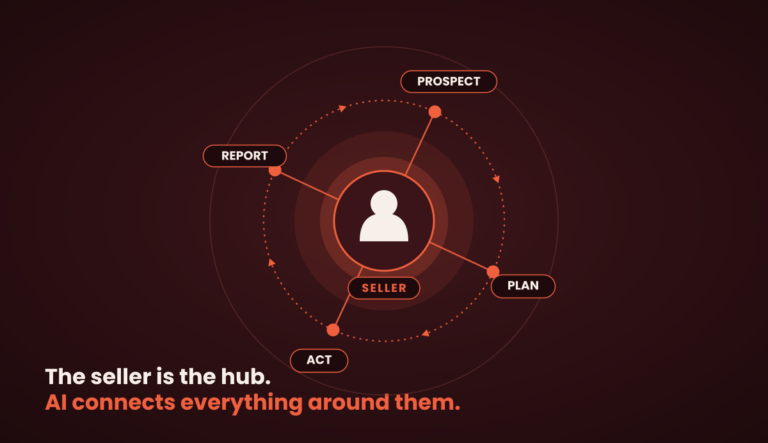
AI in local advertising has mostly been aimed at media buying. The larger untapped opportunity sits earlier in the revenue cycle — with the sellers who understand advertisers, build the campaigns, and grow local businesses. Most of the buy-side tooling now on the market optimizes what happens after the deal is done. Very little of it helps the person doing the deal.
The ecosystem’s progress on the buy side is real. Faster optimization, better targeting, more efficient planning, creative generation — these are meaningful developments. But they’re only part of the story.
For sellers, AI represents a new way to think about productivity, their role in the modern media organization, and, more granularly, how to work better across connected workflows to unlock this technology’s full potential.
Why seller productivity is a business priority in local media
The role of the local media seller has changed dramatically over the past decade. These sellers once focused primarily on a handful of products. They’re now expected to guide advertisers across streaming TV, online video, digital audio, display, audience targeting, measurement, and more. Clients increasingly expect strategic recommendations that connect business goals to the right mix of channels, budgets, and messaging.
At the same time, many local organizations are asking those same teams to manage more advertisers without additional headcount. That pressure lands on every stage of the revenue cycle.
And the day-to-day still takes time. Prospect research, proposal prep, campaign data pulls, client questions, report reconciliation — each of these is essential work, and each one reduces the time a seller has to strengthen advertiser relationships and find new opportunities.
Seller productivity is a bigger business priority than ever, because helping sellers work more efficiently creates value for their teams, their advertisers, and the organization as a whole.
How AI changes the role of the local media seller
AI has the potential to make every client conversation more personalized and informed. Instead of beginning with a blank proposal or searching across multiple platforms for campaign information, sellers can enter those conversations with a firmer grasp of business and local context — and with tailored recommendations that reflect an advertiser’s particular goals.
AI can also accelerate much of the work that surrounds a campaign, from researching prospective clients to preparing presentations and organizing reporting. That doesn’t eliminate the seller’s role. It gives them stronger information with which to do their job.
Local media has always succeeded because sellers understand their communities, know their advertisers, and recognize opportunities that aren’t obvious from a dashboard alone. AI complements those strengths by helping them prepare more quickly, respond more confidently, and spend more time focused on the conversations that move business forward.
How connected workflows unlock AI’s full potential
The quality of AI depends on the quality of the information available to it. Many organizations already use AI to complete individual tasks, but sellers often continue moving between separate systems for prospecting, planning, campaign execution, reporting, billing, and customer management. Valuable context is created at every stage, and it rarely carries cleanly into the next one.
Connecting those workflows changes what AI can accomplish. When campaign performance, customer history, revenue data, and operational information exist within the same workflow, AI can surface more relevant recommendations, identify opportunities earlier, and help sellers determine what action makes the most sense next. That continuity also creates a better experience for advertisers, because every interaction builds on what came before rather than starting over.
How Ribeye puts AI to work for local media sellers
At Ribeye, we believe AI creates the most value when it’s woven throughout the revenue workflow rather than added on as another standalone feature.
Ribeye’s operating system connects prospecting, planning, execution, reporting, and optimization into a single environment, which gives sellers the context they need throughout the lifecycle of every advertiser relationship. AI can then help identify new opportunities, build stronger recommendations, connect proposals to execution, and highlight renewal or optimization opportunities as campaigns evolve.
More than a tool for helping teams work fast, our operating system allows local media sellers to spend more of their day doing what they’ve always done best: building trusted relationships, helping advertisers grow, and creating long-term value for the communities they serve.
AI for Local Media Sellers: Frequently Asked Questions
Will AI replace local media sellers?
No. AI takes over research- and reporting-heavy tasks like gathering campaign data and preparing proposals, but relationship-building, community knowledge, and reading opportunities a dashboard can’t see remain the seller’s job.
What tasks can AI handle for local media sellers?
AI can help with researching prospects, preparing proposals, gathering campaign data, answering routine client questions, and reconciling reports — the recurring tasks that eat into time sellers could spend on advertiser relationships.
Why is seller productivity a bigger priority now than in the past?
Sellers now manage more channels (streaming TV, digital audio, display, audience targeting) and more advertisers, often without added headcount, which puts pressure on every stage of the revenue cycle.
What’s the difference between AI for media buying and AI for sellers?
Most AI advertising tools today focus on media buying — optimization, targeting, and creative generation. Far less investment has gone into AI for the seller’s side of the business: prospecting, proposals, and client management.
Why do connected workflows matter for AI in advertising?
AI’s output is only as good as the context it has access to. When prospecting, planning, execution, reporting, and billing live in separate systems, valuable context gets lost between steps — connecting those workflows lets AI surface better recommendations and spot opportunities earlier.
How does Ribeye help local media sellers use AI?
Ribeye connects prospecting, planning, execution, reporting, and optimization into a single operating environment, giving AI full context across the advertiser relationship so it can help identify opportunities, build recommendations, and flag renewal or optimization moments.

